

Easy Lemon Lavender Shortbread Cookies You’ll Actually Crave
Most lemon lavender shortbread cookies recipes produce a cookie that’s either too crumbly to hold its shape or too dense to have any delicacy. The problem is usually the butter ratio — too much and the cookie spreads and breaks, too little and you lose that characteristic melt-in-your-mouth quality that makes shortbread worth making.
These lemon lavender shortbread cookies use a specific cold-butter technique and a resting period that gives you a cookie with a firm edge, a slightly soft center, and a crumb that holds together when you pick it up but dissolves the moment it hits your tongue. The lemon zest is pressed directly into the sugar before mixing — this releases the citrus oils into the fat, which distributes flavor throughout the dough instead of leaving bright lemon pockets surrounded by plain butter.
If you’ve never baked with culinary lavender before, this is a forgiving recipe to start with. The lavender amount is calibrated to read as floral without tipping into soapy — a balance that’s easier to miss than most recipes admit. This lemon lavender cookies recipe from scratch uses no special equipment beyond a rolling pin and a cookie cutter, and the dough can be made a day ahead.
One thing you’ll notice when the dough comes together: it looks too dry and shaggy to possibly roll out. Don’t add liquid. Press it together with your hands — it will become smooth and cohesive within about 60 seconds of working it.
Table of Contents
Quick Recipe Facts
- Prep Time: 20 minutes
- Chill Time: 30 minutes
- Cook Time: 12–14 minutes
- Total Time: ~1 hour 10 minutes
- Servings: 20–24 cookies
- Difficulty: Beginner–Intermediate
- Calories: ~110 per cookie
Ingredients for Lemon Lavender Shortbread Cookies
Cookie Dough
- 1 cup (226g) unsalted butter, cold and cubed
- ½ cup (60g) powdered sugar, sifted
- 2 tablespoons granulated sugar
- 1½ teaspoons dried culinary lavender, finely ground
- 1½ teaspoons fresh lemon zest (from 1 large lemon)
- 1 teaspoon pure vanilla extract
- 2 cups (240g) all-purpose flour
- ¼ teaspoon fine salt
Lemon Glaze (optional)
- 1 cup (120g) powdered sugar
- 2–3 tablespoons fresh lemon juice
- Pinch of salt
For garnish (optional)
- Dried culinary lavender buds
- Lemon zest curls
A note on the lavender: grinding it matters. Whole dried buds left in the dough create uneven bursts of floral flavor and an unpleasant chewy texture in spots. Use a mortar and pestle or spice grinder to break them down to a coarse powder before adding to the sugar. For this lemon lavender shortbread cookies dough, you want the lavender incorporated into the fat, not floating as distinct pieces.
Use culinary-grade lavender only. Ornamental lavender sold for dried flower arrangements is not food-safe and can taste medicinal.
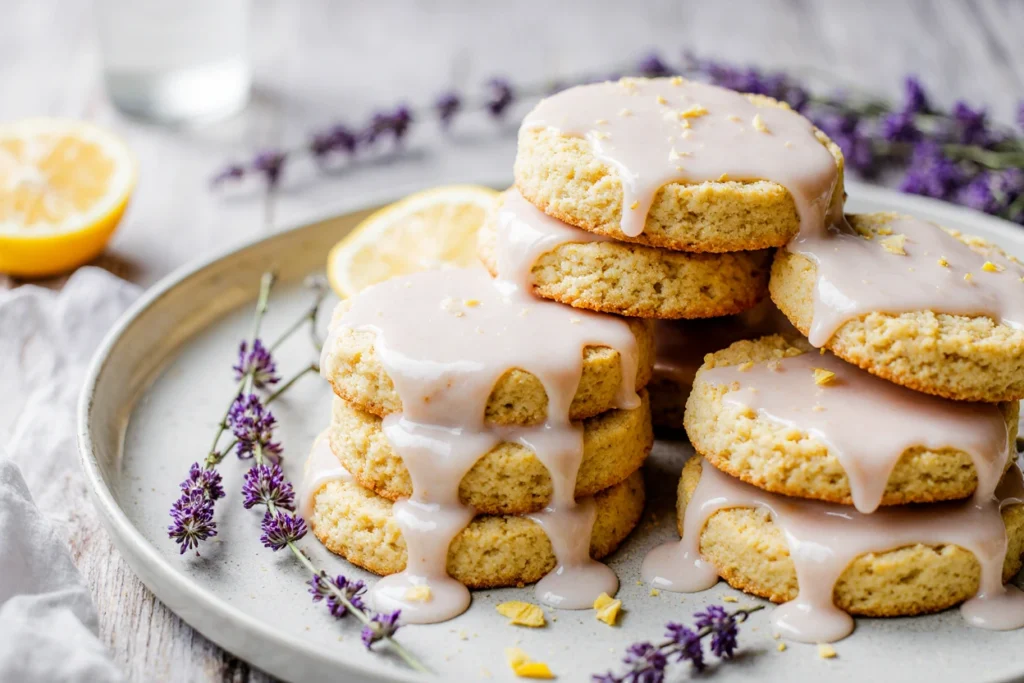
How to Make Soft Lemon Lavender Shortbread Cookies
1. Grind the lavender and combine with sugar and lemon zest. Add the ground culinary lavender, granulated sugar, and lemon zest to a small bowl. Use your fingertips to rub everything together for about 30 seconds — this step bruises the zest and pushes the citrus oils into the sugar, which means the lemon flavor distributes evenly through the entire batch rather than concentrating in isolated spots.
2. Cream the cold butter and powdered sugar. In a stand mixer fitted with the paddle attachment, beat the cold cubed butter and sifted powdered sugar on medium speed for 2 minutes until the mixture looks pale and slightly fluffy. Cold butter is intentional here — it limits gluten development and keeps the final cookie tender rather than tough.
3. Add the lavender-lemon sugar and vanilla. Add the lavender-lemon sugar mixture and vanilla extract to the butter. Beat on medium for another 60 seconds until fully incorporated. Scrape down the sides of the bowl.
4. Add flour and salt — mix until just combined. Add the flour and salt all at once. Mix on low speed until the dough begins to clump, about 45–60 seconds. Stop the mixer when you still see a few dry streaks. Overmixing at this stage develops gluten and makes the cookie tough rather than crumbly.
5. Bring the dough together by hand. Turn the dough out onto a clean surface. It will look shaggy and dry — that’s correct at this stage. Press it together with your palms for about 60 seconds. The warmth of your hands will bring it into a smooth, cohesive disc. If the dough cracks at the edges when you press it, give it another 20 seconds of working.
6. Wrap and chill for 30 minutes. Flatten the dough into a disc about 1 inch thick, wrap tightly in plastic wrap, and refrigerate for a minimum of 30 minutes. Chilling re-firms the butter, which prevents spreading during baking and helps the cookies hold their cut shape cleanly.
7. Preheat the oven to 325°F (163°C). Line two baking sheets with parchment paper. The lower temperature matters — 350°F will brown the bottoms before the centers are fully set, which gives you a harder cookie with less of the melt-in-your-mouth quality shortbread is known for.
8. Roll and cut the dough. On a lightly floured surface, roll the chilled dough to ¼ inch thickness. Cut into shapes using a 2–2.5 inch cookie cutter. Transfer to prepared baking sheets, spacing about 1 inch apart. Re-roll scraps once — more than that and the dough becomes overworked.
9. Chill the cut cookies for 15 minutes before baking. Place the baking sheets in the freezer for 15 minutes. This is the step most recipes skip, and it’s why cut cookies sometimes lose their sharp edges in the oven. Cold cookies = clean edges = better texture.
10. Bake for 12–14 minutes. Bake until the edges are just barely starting to turn a pale gold and the tops look dry and set — not shiny. The centers will look slightly underdone when you pull them out. That’s correct. They firm up as they cool on the pan. If you wait for them to look fully done in the oven, they’ll be overbaked by the time they’re room temperature.
11. Cool completely before glazing. Let cookies cool on the baking sheet for 10 minutes, then transfer to a wire rack. Do not glaze warm cookies — the glaze will absorb into the surface and disappear instead of setting into a thin, glossy layer.
12. Make and apply the lemon glaze (optional). Whisk powdered sugar, lemon juice, and a pinch of salt until smooth. The glaze should coat the back of a spoon and run off slowly — if it’s too thick, add lemon juice ½ teaspoon at a time. Dip each cooled cookie halfway, tap off the excess, and let set on parchment for 20–30 minutes at room temperature.

Pro Tips for Lemon Lavender Shortbread Cookies
- Measure flour by weight, not volume — a packed cup of flour can add 20–30% more than intended, which produces a dense, dry cookie that crumbles rather than snaps cleanly.
- Don’t skip the double chill — chilling the dough disc and then chilling again after cutting are two separate jobs; the first relaxes the dough, the second locks in the shape before heat hits it.
- Grind lavender finer than you think necessary — in testing these lemon lavender shortbread cookies, the most common complaint about lavender baked goods is an unpleasant chewy bud in the bite; grinding eliminates this entirely.
- Pull cookies at pale gold, not golden — shortbread continues cooking on the hot pan after it comes out of the oven; what looks underdone at 12 minutes is correctly done at 20 minutes post-bake.
- Use fresh lemon zest only — bottled lemon extract has a chemical sharpness that fights the lavender rather than complementing it; the oils in fresh zest are softer and more aromatic.
Serving Suggestions
With Earl Grey or chamomile tea — the tannins in black tea balance the buttery richness of the cookie; chamomile echoes the floral note in the lavender without competing with it.
On a summer dessert board — pair with fresh raspberries, a soft goat cheese or brie, and honeycomb; the contrast of tart fruit and creamy cheese against the buttery cookie works well for outdoor gatherings or a casual afternoon spread.
As a gifted treat — these cookies hold their shape and texture for several days at room temperature, which makes them a practical option for packaging in a box or tin for a hostess gift, a shower, or a summer holiday gathering.

Storage
Room temperature: Store in an airtight container with parchment between layers, up to 5 days — texture stays firm with a slight snap and does not dry out if sealed properly.
Refrigerator: Up to 10 days in an airtight container — remove 15 minutes before serving so the butter in the cookie can soften slightly; cold shortbread can taste waxy.
Freezer (baked): Lemon lavender shortbread cookies freeze well — layer between parchment in a freezer-safe container, up to 8 weeks. Thaw at room temperature for 30–45 minutes. Do not microwave to thaw; it changes the texture of the butter.
Freezer (unbaked dough): Wrap the dough disc tightly in plastic wrap and then foil, up to 6 weeks. Thaw overnight in the refrigerator before rolling and cutting.
Health & Nutrition
Approximate nutrition per cookie (without glaze): ~110 calories | 7g fat | 11g carbohydrates | 1g protein | 0.5g fiber
Specific swaps and their effects:
- Replace all-purpose flour with a 1:1 gluten-free flour blend — texture becomes slightly more crumbly and less crisp on the edge; flavor is not significantly affected. For a fully gluten free lemon lavender shortbread cookies version, add ¼ teaspoon xanthan gum if your blend doesn’t already contain it.
- Reduce powdered sugar by 2 tablespoons — produces a less sweet, more savory-forward cookie that lets the lavender flavor read more clearly; works well if serving alongside sweet tea or fruit.
- Replace butter with high-quality vegan butter sticks — use the same weight; cookies will spread slightly more, so chill cut cookies for 20 minutes instead of 15 before baking. The flavor is close but lacks the same depth as dairy butter.
- Cut the lavender to 1 teaspoon — appropriate if you or your guests are new to floral baking; the flavor becomes more subtle and background rather than a defining note.
You Now Have a Reliable Lemon Lavender Shortbread Cookie Recipe
With the double-chill method, the pressed lemon-sugar technique, and the correct pull temperature, these lemon lavender shortbread cookies produce a consistent result across batches — firm edges, soft center, and a crumb that holds together without being dense. Leave a rating below or share a photo if you make them.
Related recipe: [Lavender Honey Lemon Bars] — same floral-citrus flavor profile in a bar format that requires no rolling or cutting, and works for larger batches.
Frequently Asked Questions
Q: Can I freeze lemon lavender shortbread cookies? A: Yes, lemon lavender shortbread cookies freeze well for up to 8 weeks when baked and cooled completely. Layer between sheets of parchment in an airtight container and thaw at room temperature for 30–45 minutes before serving. If glazed, freeze without the glaze and add it after thawing.
Q: What if I don’t have culinary lavender? A: You can omit it entirely — the result is a straightforward lemon shortbread with no floral note. There is no direct substitute that replicates lavender’s flavor. Dried culinary rosemary, very finely ground, gives an herbal note that’s different but intentional. Do not use lavender essential oil in place of dried buds — the concentration is too high and the result is inedible.
Q: Can I make the dough ahead of time? A: Yes — up to 48 hours ahead in the refrigerator, or 6 weeks ahead in the freezer. Let refrigerated dough sit at room temperature for 10 minutes before rolling, or it may crack at the edges. Frozen dough needs overnight thawing in the refrigerator.
Q: How do I adjust the sweetness? A: Reduce the powdered sugar by up to 2 tablespoons for a less sweet cookie with a more pronounced butter and lavender flavor. Reducing further than that affects texture — the cookie becomes slightly drier and more prone to crumbling at the edges. The glaze adds significant sweetness on its own, so if glazing, consider reducing the sugar in the dough by 1 tablespoon.
Q: Why do my cookies lose their shape in the oven? A: The most common cause is skipping one or both chilling steps. Butter that isn’t cold when the cookies go into the oven spreads before the flour structure sets, which rounds out cut edges and causes thin spots. For these lemon lavender shortbread cookies, the second chill — 15 minutes in the freezer after cutting — is the more important of the two. Also check that your oven is calibrated; an oven running 25°F hot will spread butter faster than the dough can set.
Have You Tried Our Recipe?
There are no reviews yet. Be the first one to write one.