
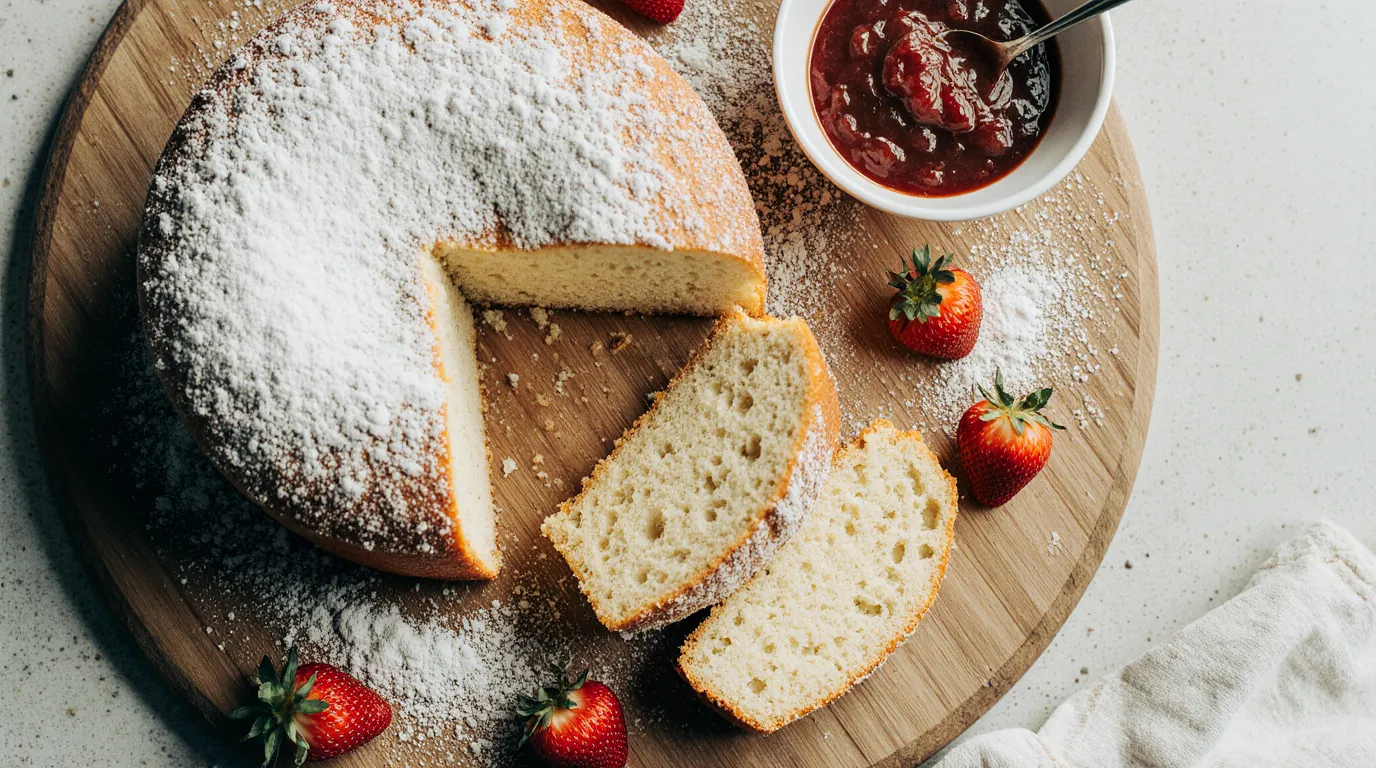
Easy Vanilla Sponge Cake for Beginners — Soft Layers
Most vanilla sponge cake recipes fail at the same point: the batter looks right, the oven temperature is set, and yet the crumb comes out dense, rubbery, or dry within a day. The problem is almost never the ingredients — it’s the technique applied to them. This vanilla sponge cake relies on a warm egg-and-sugar base beaten to ribbon stage, plus a hot milk finish that keeps the crumb tender for days without added oil or sour cream. It works for a first-time baker following instructions precisely, and it holds up as a base for a moist vanilla sponge cake recipe layered with buttercream or whipped cream.
One thing most recipes won’t tell you: when you pour the hot milk into the batter, it will look like you’ve broken it. The mixture thins dramatically and seems too loose for a cake. Keep going — that’s exactly what a fluffy vanilla sponge cake from scratch is supposed to look like before baking.
Table of Contents
Quick Recipe Facts
- Prep Time: 20 minutes
- Cook Time: 30–35 minutes
- Total Time: 50–55 minutes
- Servings: 10 slices
- Difficulty: Intermediate
- Calories: ~300 kcal per slice
Ingredients for Vanilla Sponge Cake
Cake Batter
- 4 large eggs, room temperature
- 1 cup (200g) granulated sugar
- 1½ cups (190g) cake flour, sifted
- 1½ tsp baking powder
- ¼ tsp fine salt
- ½ cup (120ml) whole milk
- 4 tbsp (56g) unsalted butter
- 2 tsp pure vanilla extract
For a simple vanilla layer cake, add:
- 1½ cups heavy whipping cream + 2 tbsp powdered sugar (whipped to stiff peaks)
- ½ cup strawberry jam or fruit preserves
This vanilla sponge cake keeps its structure well enough to stack two or three layers without the crumb compressing under the weight — something a lower-ratio flour recipe won’t do.
How to Make Fluffy Vanilla Sponge Cake from Scratch
1. Preheat oven to 350°F (175°C) and prepare two 8-inch round pans — line the bottoms with parchment and grease the sides lightly. Skipping the parchment causes the base to tear when releasing.
2. Warm the milk and butter together in a small saucepan over low heat — the mixture should reach about 140°F, enough to melt the butter fully. Remove from heat, stir in vanilla, and set aside. It needs to stay warm, not cool, when added to the batter.
3. Combine eggs and sugar in the bowl of a stand mixer — set the bowl over a saucepan of barely simmering water, stirring constantly until the mixture reaches 110°F and the sugar fully dissolves. This step loosens the egg proteins and is the foundation of the lift in this vanilla sponge cake.
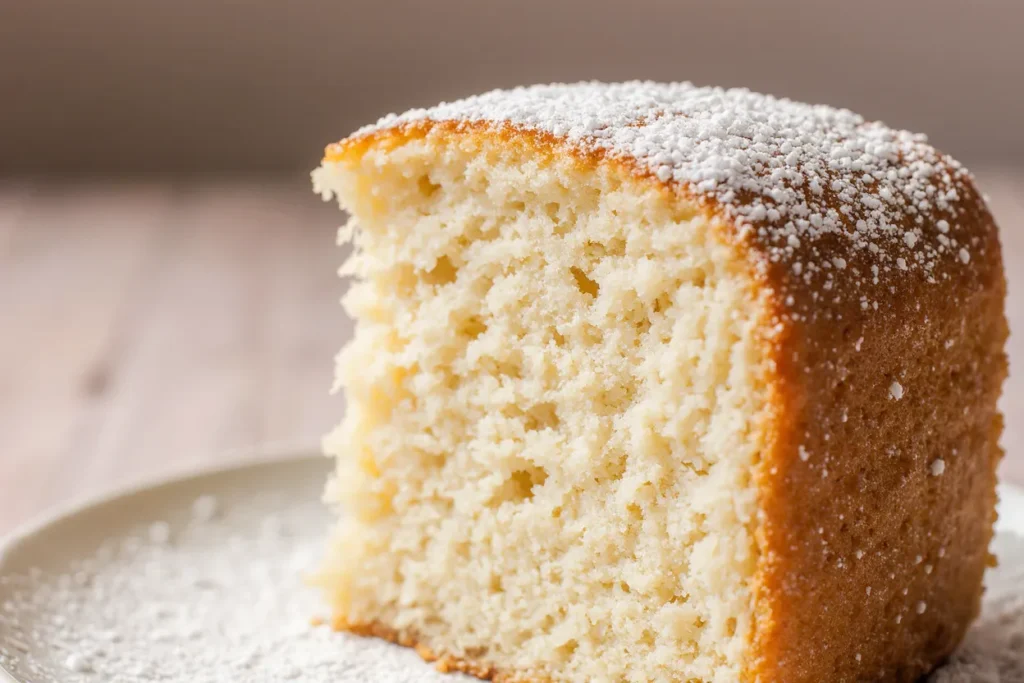
4. Beat the warmed egg-sugar mixture on high speed for 7–8 full minutes — the batter should triple in volume, turn nearly white, and fall from the beater in a thick ribbon that holds its shape for several seconds before dissolving back in. If it’s still yellow and runny at 5 minutes, keep beating.
5. Sift cake flour, baking powder, and salt directly onto the whipped batter in three additions — fold each addition with a wide spatula using slow, deliberate strokes from the bottom of the bowl. Overfold here and you lose the air you spent 8 minutes building.
6. Add the warm milk mixture in a thin stream down the side of the bowl while folding — the batter will loosen significantly. This is correct. Fold just until no streaks of milk remain.
7. Divide batter evenly between the two prepared pans and bake for 28–33 minutes — the surface should be golden and spring back when lightly pressed in the center. The edges will begin pulling from the pan. A toothpick inserted in the center should come out with no wet batter, only a few dry crumbs.
8. Cool in pans for 10 minutes, then invert onto a wire rack — wait until completely cool before slicing or layering. Cutting a warm sponge compresses the crumb permanently.
Pro Tips for a Better Vanilla Sponge Cake
- Use cake flour, not all-purpose — the lower protein content directly affects how tender the crumb turns out; all-purpose produces noticeably more chew.
- Room temperature eggs whip to a higher volume than cold ones — if you forgot to take them out, place them in warm water for 10 minutes.
- The warm-milk stage is not optional for this vanilla sponge cake — skipping it and adding cold milk deflates the batter faster than any other single mistake.
- If your oven runs hot, check at 25 minutes — overbaking by even 5 minutes changes the texture from springy to dry, and there’s no fixing it after the fact.
- Don’t grease the sides of the pan too heavily — a thin coating lets the batter grip the pan walls and climb evenly; a thick coat causes the edges to pull inward and sink.
Serving Suggestions
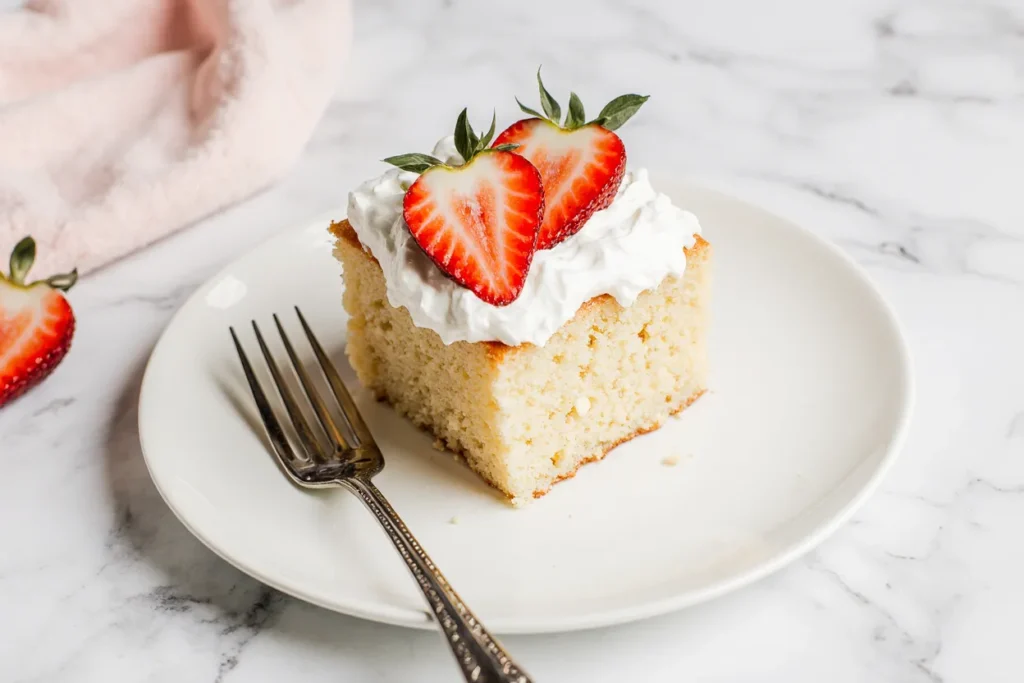
- Layer with lightly sweetened whipped cream and sliced strawberries for a classic American strawberry shortcake — works well for spring and summer occasions where a lighter dessert is more appropriate than a frosted layer cake.
- Fill with vanilla buttercream and dust the top with powdered sugar for a clean, understated birthday cake that holds at room temperature for several hours without sliding.
- Serve a single layer warm with a spoonful of fruit compote alongside — the slightly warm crumb absorbs the juice without going soggy if eaten within 20 minutes of cutting.
Storage
Unfrosted vanilla sponge cake: wrap tightly in plastic wrap, room temperature, up to 2 days — crumb stays soft without drying if sealed immediately after cooling. Refrigerating an unfrosted sponge pulls moisture out faster than leaving it at room temperature.
Frosted cake: covered, refrigerated, up to 4 days — bring to room temperature for 30 minutes before serving so the crumb relaxes back to its original texture.
Freezing: vanilla sponge cake freezes well unfrosted — wrap individual layers tightly in two layers of plastic wrap, then foil, up to 8 weeks. Thaw overnight in the refrigerator still wrapped, then bring to room temperature before frosting.
Health & Nutrition
Approximate per slice (1/10 of recipe, unfrosted): ~300 kcal | 31g carbs | 18g fat | 4g protein
- Replace cake flour with a 1:1 gluten-free baking flour — texture is slightly denser but the structure holds for a workable gluten free vanilla sponge cake; add ¼ tsp xanthan gum if your blend doesn’t include it.
- Reduce sugar by 20% (cut to 160g) — the batter still whips correctly and the crumb remains stable; the cake tastes noticeably less sweet but the structure doesn’t change.
- Substitute the butter in the milk mixture with a neutral oil like avocado or refined coconut oil — the crumb stays marginally moister on day two but loses a small amount of the dairy flavor that defines a classic version.
You Now Have a Reliable Vanilla Sponge Cake Base
Follow these steps and you get a vanilla sponge cake with a consistent, tender crumb that works plain, layered, or as the base for any frosted cake. If you try it, leave a rating or drop a question in the comments — it helps others find the right details for their version.
Related: [Victoria Sponge Cake Recipe] — uses the same base technique with a cream-and-jam filling, worth reading if you want a British-style presentation with less frosting.
FAQ
Q: Can I freeze this vanilla sponge cake? A: Yes — freeze unfrosted layers wrapped in plastic and foil for up to 8 weeks. Thaw overnight in the refrigerator still wrapped to prevent condensation from forming on the surface, which would make the exterior sticky.
Q: What if I don’t have cake flour? A: Substitute with all-purpose flour minus 2 tablespoons per cup, replaced with cornstarch. The crumb will be slightly firmer and less delicate, but the recipe works. The difference is noticeable side-by-side but acceptable on its own.
Q: Can I make this ahead? A: Yes — bake layers up to 2 days ahead, wrap tightly in plastic at room temperature. For further ahead, freeze. Don’t fill or frost more than a day before serving if using fresh whipped cream, as it softens the layers noticeably by hour 24.
Q: How do I adjust sweetness? A: Reduce sugar by up to 25% (to 150g) without affecting structure. Below that, the egg foam loses some stability because sugar helps hold the whipped structure during baking. The cake will also brown slightly less on the surface.
Q: My vanilla sponge cake sank in the center — what happened? A: The most common cause is underbaking or opening the oven door in the first 20 minutes, which causes the heat to drop before the structure sets. A sunken center can also mean the batter was overfolded after adding the flour, collapsing too much air before it had a chance to set in the oven. This vanilla sponge cake is more forgiving than a classic génoise, but the fold stage still requires a light hand.
Have You Tried Our Recipe?
success!!
i made this cake after several blunders and it’s turned out really nicely! instructions were really helpful and easy to follow, and i think i’ve just found myself a staple recipe 🙂
Response from TastyDessertRecipes
Aww, I’m so glad you gave it a try despite the blunders! 🥹💕 So happy the instructions were easy to follow and that it turned out nicely! Thank you so much for your lovely feedback, it means a lot!